“미녹시딜 사용, 현실적인 기대치와 부작용은?”: “미녹시딜 사용 후 기대할 수 있는 효과의 범위와 개인차가 발생하는 이유를 설명하고, 흔하게 나타나는 부작용과 이를 관리하는 현실적인 방법, 그리고 장기 사용 시 고려해야 할 점들을 공유합니다.”,
미녹시딜, 얼마나 기다려야 효과가 보일까?
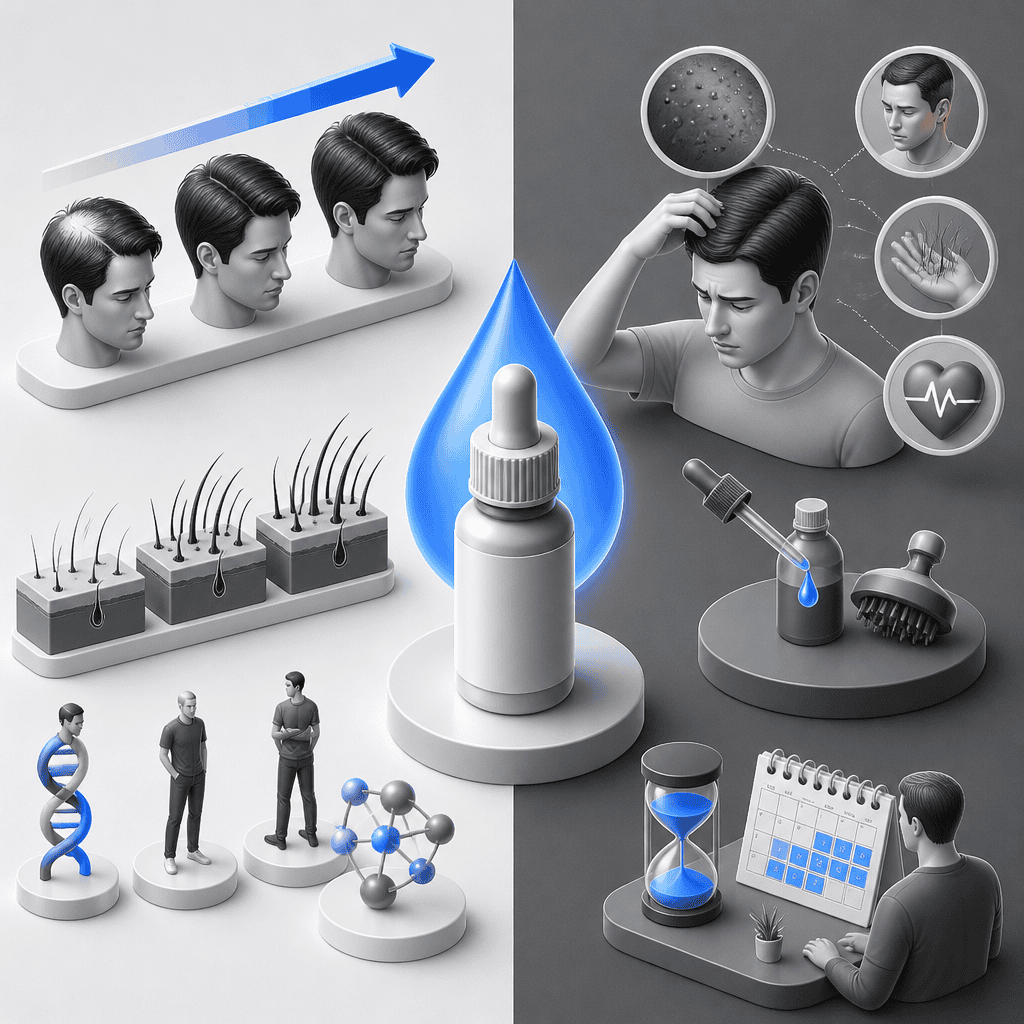
When considering the use of minoxidil for hair regrowth, its crucial to set realistic expectations regarding the timeline and extent of results. While minoxidil is a widely recognized topical treatment for androgenetic alopecia, its efficacy is not uniform across all individuals. The onset of visible results can vary significantly, typically ranging from three to six months of consistent, daily application. This variability stems from a complex interplay of factors including the individuals genetic predisposition, the severity and duration of hair loss, the specific concentration of minoxidil used (2% or 5%), and the underlying health of the scalp. Some users may experience subtle improvements within a few months, while others might require closer to a year to notice substantial changes. Furthermore, its important to understand that minoxidil works by prolonging the anagen (growth) phase of hair follicles and potentially increasing their size, but it does not address the hormonal root cause of male or female pattern baldness. Therefore, the degree of regrowth achieved is often limited, and maintenance therapy is essential to sustain any gains, as discontinuing the treatment will likely lead to the shedding of newly grown hair. This personalized response to treatment underscores the need for patience and consistent application, rather than expecting immediate or dramatic transformations. Understanding these nuances is key to managing user expectations and fostering adherence to the treatment regimen, paving the way for a discussion on potential side effects and long-term considerations.
피할 수 없는 부작용? 미녹시딜 사용 중 흔하게 겪는 증상과 관리법
The journey with minoxidil, a widely recognized topical treatment for hair loss, is often accompanied by a set of expectations and potential challenges. While many individuals turn to minoxidil with the hope of significant hair regrowth, its crucial to approach its use with a grounded understanding of what is realistically achievable. The efficacy of minoxidil can vary considerably from person to person, influenced by factors such as the underlying cause of hair loss, the duration of use, and individual genetic predispositions. For some, noticeable results might manifest within a few months, presenting as a thickening of existing hair or the emergence of fine, vellus hairs. However, for others, the response might be more subtle, or even minimal, despite consistent application. This variability is a key aspect of managing expectations; its not a universal cure, but rather a treatment that works differently for each individual.
Beyond the expected outcomes, users must also be prepared for the common side effects associated with minoxidil. The most frequently reported issues revolve around scalp irritation. This can manifest as redness, itching, dryness, and sometimes even a mild burning sensation. For instance, Ive encountered cases where patients initially experienced intense itching, leading them to question the treatments suitability. In such scenarios, the initial reaction is often to discontinue use. However, a closer examination of their application method and product concentration often reveals the culprit. Applying too much product, or using it on a scalp that is already sensitive or inflamed, can exacerbate these symptoms. A practical approach here involves reducing the frequency of application, ensuring the scalp is completely dry before application, and using a gentle, sulfate-free shampoo. In some instances, switching to a lower concentration of minoxidil, if available, or a d 미녹정 ifferent formulation, like a foam over a solution, can also make a significant difference.
Another side effect that often causes alarm, particularly in the initial stages of treatment, is increased shedding. This phenomenon, often referred to as shedding, occurs because minoxidil works by stimulating hair follicles and pushing dormant hairs into the active growth phase. As new hairs begin to grow, they can dislodge the older, resting hairs, leading to a temporary increase in hair loss. This can be quite disconcerting, as it appears counterintuitive to the desired outcome. However, understanding this mechanism is key to persevering. Typically, this shedding phase is temporary and subsides within a few weeks to a couple of months, usually followed by visible regrowth. Educating patients about this possibility beforehand is paramount; without this knowledge, the increased shedding can lead to premature discontinuation of an otherwise effective treatment.
Managing these side effects effectively often requires a proactive and personalized approach. Beyond adjusting application frequency or formulation, maintaining good scalp hygiene is vital. Gentle cleansing routines that avoid harsh chemicals can help maintain a healthy scalp environment. For those experiencing persistent dryness or flaking, incorporating a hydrating, non-comedogenic scalp serum or conditioner can be beneficial, provided it doesnt interfere with minoxidil absorption. Its also important to differentiate between a mild, manageable irritation and a more severe allergic reaction. While minor redness and itching might be tolerated or managed, signs like severe blistering, swelling, or persistent pain warrant immediate medical attention and discontinuation of the product.
Considering the long-term use of minoxidil also brings its own set of considerations. As the medication works by sustaining the growth phase of hair follicles, continuous application is generally necessary to maintain the achieved results. Stopping minoxidil often leads to a gradual reversal of its effects, with hair loss resuming its previous pattern. Therefore, individuals contemplating long-term use should factor this into their treatment plan and lifestyle. Furthermore, ongoing monitoring for any changes in scalp condition or systemic effects, though rare, is advisable. Discussions with a dermatologist can provide tailored advice on integrating minoxidil into a comprehensive hair care regimen, potentially combining it with other treatments or lifestyle adjustments for optimal and sustained outcomes.
The discussion on minoxidils effects naturally leads to exploring other avenues for hair restoration and management. While minoxidil addresses the stimulation of existing follicles, understanding the root causes of hair loss, such as hormonal imbalances or nutritional deficiencies, is equally important. This brings us to the broader spectrum of hair health, encompassing diet, stress management, and other therapeutic interventions.
장기적인 관점에서 본 미녹시딜: 효과 유지와 중단 시 고려사항
An unexpected error occurred. Please check the logs.
미녹시딜, 나에게 맞는 사용법은? 개인 맞춤형 접근과 전문가 상담의 중요성
When considering minoxidil for hair loss, its crucial to set realistic expectations. The effectiveness of minoxidil varies significantly from person to person due to a complex interplay of factors including genetics, the underlying cause of hair loss, and individual response to the medication. While some individuals experience noticeable regrowth within a few months, others may see only a slowing of hair loss or minimal improvement. Its not a magic bullet, and patience is key.
Common side effects are also a reality. These often include scalp irritation, itching, and dryness. Some users may experience unwanted hair growth in areas where the medication is applied, such as the face. A less common but concerning side effect is shedding, where you might notice increased hair loss in the initial weeks of treatment. This is often a sign that the medication is working by pushing dormant hairs out to make way for new growth, but it can be distressing. Managing these side effects usually involves adjusting the frequency of application, ensuring proper application technique to avoid unintended areas, and using gentle, scalp-friendly shampoos. If irritation persists, consulting a dermatologist is essential to explore alternative formulations or management strategies.
Long-term use of minoxidil also warrants careful consideration. Continuous application is generally required to maintain any benefits achieved. Discontinuing the treatment will likely lead to a reversal of the positive effects, with hair loss resuming. Therefore, a long-term commitment is necessary. Furthermore, its important to regularly reassess the treatments efficacy and your scalps condition with a healthcare professional. They can help monitor for any new issues, adjust the dosage or formulation if needed, and ensure that minoxidil remains the optimal choice for your ongoing hair loss management plan, especially as your hair loss pattern or other health factors might change over time. Ultimately, a personalized approach, guided by expert advice, is the most effective way to navigate the use of minoxidil and achieve sustainable results.
Leave a Reply